What is a deep freezer?
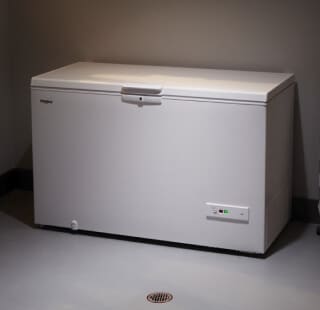
As a standalone appliance that supplements a refrigerator freezer in your kitchen, a deep freezer keeps food frozen around 0 °F, or -18°C. Both Whirlpool® Chest Freezers and Upright Freezers are considered deep freezers.
While both kinds of deep freezers offer more food storage options for your home, they differ in configuration: An upright freezer has a vertical orientation with swing doors, making it easy to see and access contents at eye level, and a chest freezer has a lid that you open from above, providing a wide, open storage area. This means freezer organization will differ depending on the freezer you purchase. Select deep freezer models in either configuration can be placed in the garage.
Use this guide to learn more about deep freezers and their benefits and compare upright vs. chest vs. refrigerator freezers to help you find the right freezing option for your home.
What are the benefits of a deep freezer?
A deep freezer keeps larger amounts of food frozen for longer periods of time and offers more space and capacity than a typical fridge freezer. If you’re wondering whether a deep freezer is right for your home, consider these points:
A deep freezer benefits a big family that buys a lot of groceries.
Living in a rural area far from grocery stores and fresh food could mean a greater need to keep foods frozen for longer.
Buying in bulk may require freezing large amounts of food at the same time.
Buying food during seasonal sales can lead to an increased need for frozen food storage.
Your subscription was successful
Thank you for signing up. Keep an eye on your inbox for our next newsletter.
Sign Up for More Insights to Stay Connected
Enjoy articles like this? Get helpful guides and appliance care tips sent straight to your inbox.
Why is it called a deep freezer?
Deep freezers, also known as chest or upright freezers, are standalone appliances that are designed to keep food frozen when you don’t plan to cook or eat it right away. They offer expanded frozen food storage for your home, making them ideal if you typically buy ingredients or frozen items in bulk.
Both chest freezers and upright freezers typically keep food at 0°F, but you can adjust the settings based on your preferences.
How cold does a deep freezer get?
When considering the temperature of a freezer vs. a deep freezer, keep in mind that deep freezers get as cold as a standard kitchen fridge freezer: 0 degrees Fahrenheit (or -18 degrees Celsius). Keeping your freezer at or below 0 degrees Fahrenheit is considered ideal, as it stops most bacteria from growing during long-term storage.
It is important to note that setting your freezer temperature too low may result in frost covering your food. To maintain an ideal temperature for your deep freezer despite setting changes, door openings, installation placement or ambient temperature shifts, be sure to monitor freezer thermometers.
Reminder: Frost is different from freezer burn. Freezer burn does not indicate a freezer’s temperature is too cold—it means that food hasn’t been sealed properly before freezing.
How much electricity does a deep freezer use?
Deep freezers and refrigerators of similar size typically have about the same electricity requirements. However, if you use your deep freezer for longer-term storage and do not open the door as often, it may help prevent the loss of cold temperature inside and reduce energy usage over time.
Where you install your deep freezer can also impact energy usage, as locations like a garage are more susceptible to environmental temperature changes that can impact the amount of energy needed to keep your freezer cold. However, select deep freezers are “garage-ready,” meaning they are designed to withstand extreme heat and cold thanks to specialized compressors, thick insulation and triple sealed gaskets.
Learn more about how a freezer works.
Deep freezer vs. refrigerator freezer comparison
Understanding the differences between deep freezers vs. refrigerator freezers can help you find the right food storage solution for your family. Explore the comparison guide below to learn more.
| Freezer type | Ballpark Capacity1 | Installation placement | Organization2 | Ideal for |
|---|---|---|---|---|
| Chest freezer | 3-25+ cu. ft. | Typically in a garage or basement | Shelves, storage bins | Long-term storage of additional frozen food |
| Upright freezer | 3-21 cu. ft. | Typically in a garage or basement | Freezer zones and shelves | Long-term storage of additional frozen food |
| Top/bottom mount refrigerator freezer | 3-7 cu. ft. | Kitchen or garage, depending on the model | Shelves and in-door racks | Storing standard amounts of frozen groceries and leftovers |
| Side-by-side refrigerator freezer | 6-12 cu. ft. | Kitchen | Shelves and in-door racks | Storing standard amounts of frozen groceries and leftovers |
| French door refrigerator freezer | 6-9 cu. ft. | Kitchen | Shelves and drawers | Storing standard amounts of frozen groceries and leftovers |
1. These numbers are general estimates. Specific capacity measurements vary depending on model and manufacturer.
2. Organization shelves, bins and racks vary depending on model and manufacturer.
A deep freezer has more space to store frozen food for longer periods than a typical fridge freezer found in your kitchen. While these estimates may vary by model, a typical kitchen fridge freezer can start as low as 3 cu. ft. capacity and be as large as 12 cu. ft., while a deep freezer capacity can generally range from 3 cu. ft. to over 25 cu. ft.
Fridge freezer configurations vary based on the overall orientation of the refrigerator. For example, they may have either drawers or doors that impact their size and capacity.
3-Level Flexible Organization
Quickly find what you’re looking for
Flexible 3-level storage system helps you keep freezer food visible and organized
What should I store in a deep freezer?
A deep freezer is best for storing and organizing a large amount of food for use within a few months or up to a year. It can accommodate meal prep routines with space to store pre-made dinners including soups and stews.
Duration of frozen food storage depends on the type of food you’re freezing. Consider these optimal time frames for storing food in a deep freezer:
- Hamburger, ground meats, ground poultry: 3-4 months
- Fresh beef, veal, lamb, pork: 4-12 months
- Whole chicken: 12 months
- Fish: 2-8 months
- Soups, stews, leftovers: 2-3 months
To help you keep track of how long your food has been stored in the freezer, clearly label the packaging or container with the date you place it in the appliance.
Note: Optimal freezer time frames are general guidelines, not exact spoilage dates. For more specific storage recommendations and spoilage time frames, visit FDA.gov.
Shop all Whirlpool® Upright and Chest Freezers
Discover what makes a freezer garage ready
Was this article helpful? Pass it on
Explore more with Whirlpool brand