









 New Code Sent!
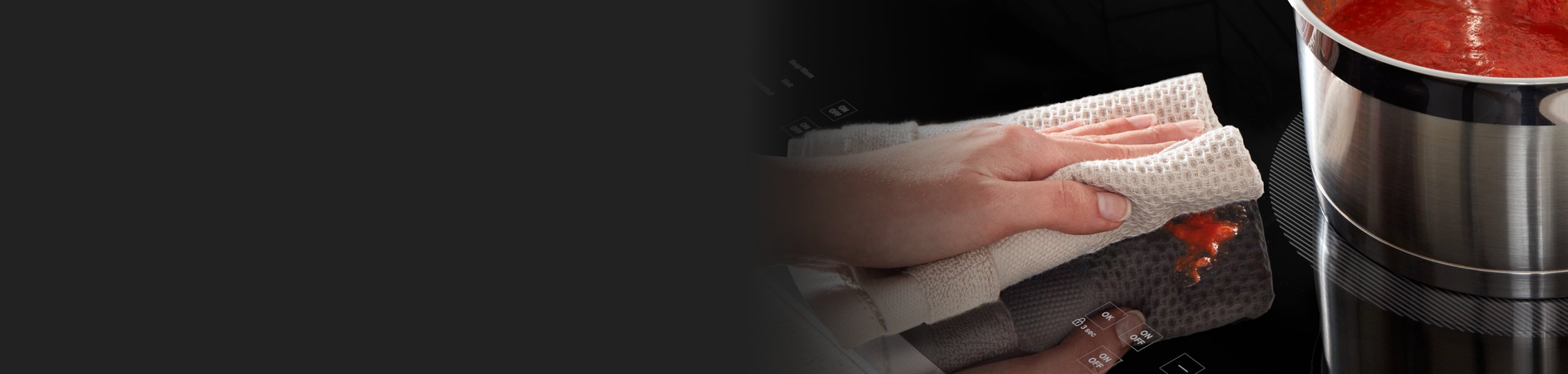
How to clean an induction cooktop
The smooth surface of induction cooktops is simple to clean, which means you can streamline your cleaning routine and spend more time at the dinner table with your family. It’s important to wipe down your cooktop after each use to help keep it looking and working its best, but not all cleaners are suitable for use on an induction cooktop. Learn more about how to clean your induction cooktop and the suitable cleaners that will help keep your kitchen tidy and mess-free, as well as instructions for removing everyday messes, hard water stains, burned-on residue and more.
Understanding the installation process can help ensure that your cooktop remains easy to clean and maintain after setup.

Sign Up for More Insights to Stay Connected
Enjoy articles like this? Get helpful guides and appliance care tips sent straight to your inbox.

Your subscription was successful
Thank you for signing up. Keep an eye on your inbox for our next newsletter.
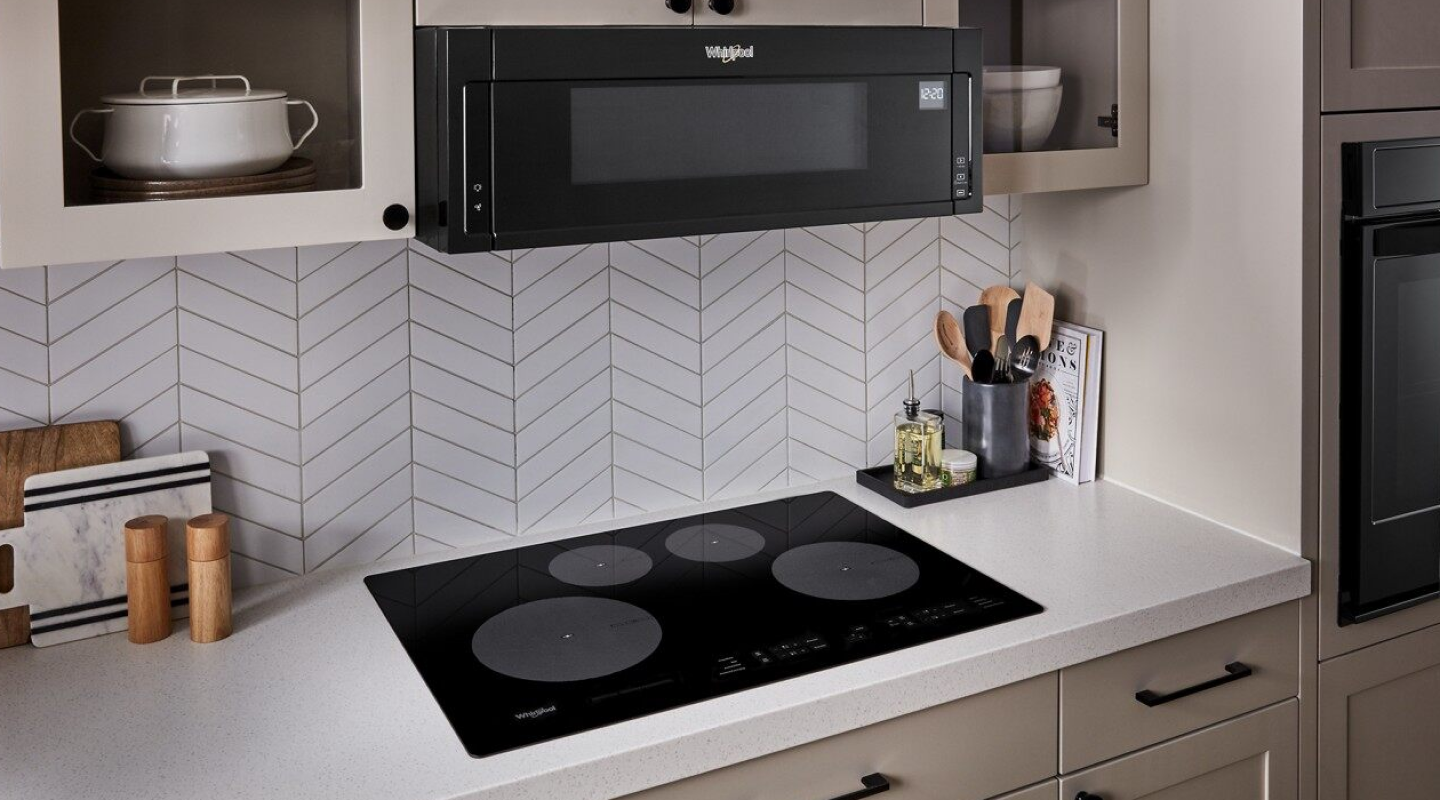
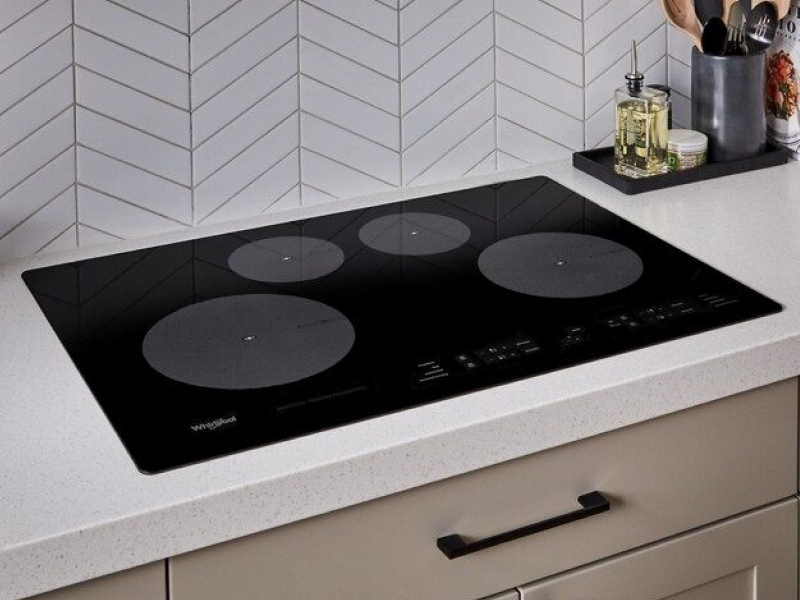
What are some cleaners that may be used on induction cooktops*?
| Cleaner | Best For | Why It Works |
|---|---|---|
Dish soap | Cleaning everyday grime | Dish soap is one of the gentlest, easiest ways to help remove everyday grime. |
Baking soda + vinegar | Tough stains and buildup | Vinegar and baking soda tend to be a bit tougher than mere soap and water, and offer some grit to help scrub off stuck-on gunk. |
Specialized cooktop cleaners | General cleaning and hard water stains | Specialized cooktop cleaners are generally designed to be used on specific cooktop surfaces, which often makes them highly effective. |
Vinegar + soft cloth | Hard water stains | Vinegar is tough on white hard water stains. |
* Can vary by manufacturer. Please consult the owner’s manual first.
Suitable cleaners for Whirlpool brand induction cooktops are dish soap, a baking soda and vinegar mixture, or a specialized cooktop cleaner. To properly care for your appliance, it’s important to use nonabrasive cleaners and tools that keep it free from grime. The best cleaner may depend on the type of mess you’re tackling. For daily, light messes, wipe down the cooktop surface with a soft, wet towel after it has cooled completely.
For tougher marks, such as hard water stains, you may need to use vinegar or a cooktop cleaning solution. Nonabrasive cleaners and soft cloths can help ensure you don’t damage the glass cooktop surface while cleaning. Note that some models may feature special coatings that aren't compatible with certain types of cleaner, or are only meant to be cleaned with water, so be sure to consult the owner’s manual first.
What cleaners are suitable for glass induction cooktops?
Dish soap, baking soda, vinegar and other gentle cleaners, as well as soft cloths and designated scraping tools, are usually safe to use on your glass induction cooktop, but you should always check your owner’s manual to be sure. Abrasive scrubbing pads like steel wool are not safe to use on glass induction cooktops. Harsh cleaners can also wear it down. Harsh cleaning agents include products like liquid bleach, rust remover, ammonia and abrasive powder cleansers.
The Whirlpool® Scraping Tool is made specifically for glass, which also makes it useful for cleaning induction cooktops. If your cooktop has burned-on food or other stains, this tool with a retractable blade can help remove the spots without damaging the appliance. Always refer to your owner’s manual for more details on what is safe to use on your induction cooktop.


How often should you clean an induction cooktop?
Wiping down your cooktop after each use can help keep it looking and working its best. Regular wipe-downs can also help prevent splatters and spills, especially from sugar-based foods, from turning into burnt-on messes and, therefore, make cleanup easier. Simply wait until the cooktop has completely cooled, then use a soft, wet towel to wipe down the cooktop surface. For daily, light messes, you may not need to use a scraper.
For heavier messes, see the induction cooktop cleaning instructions below.
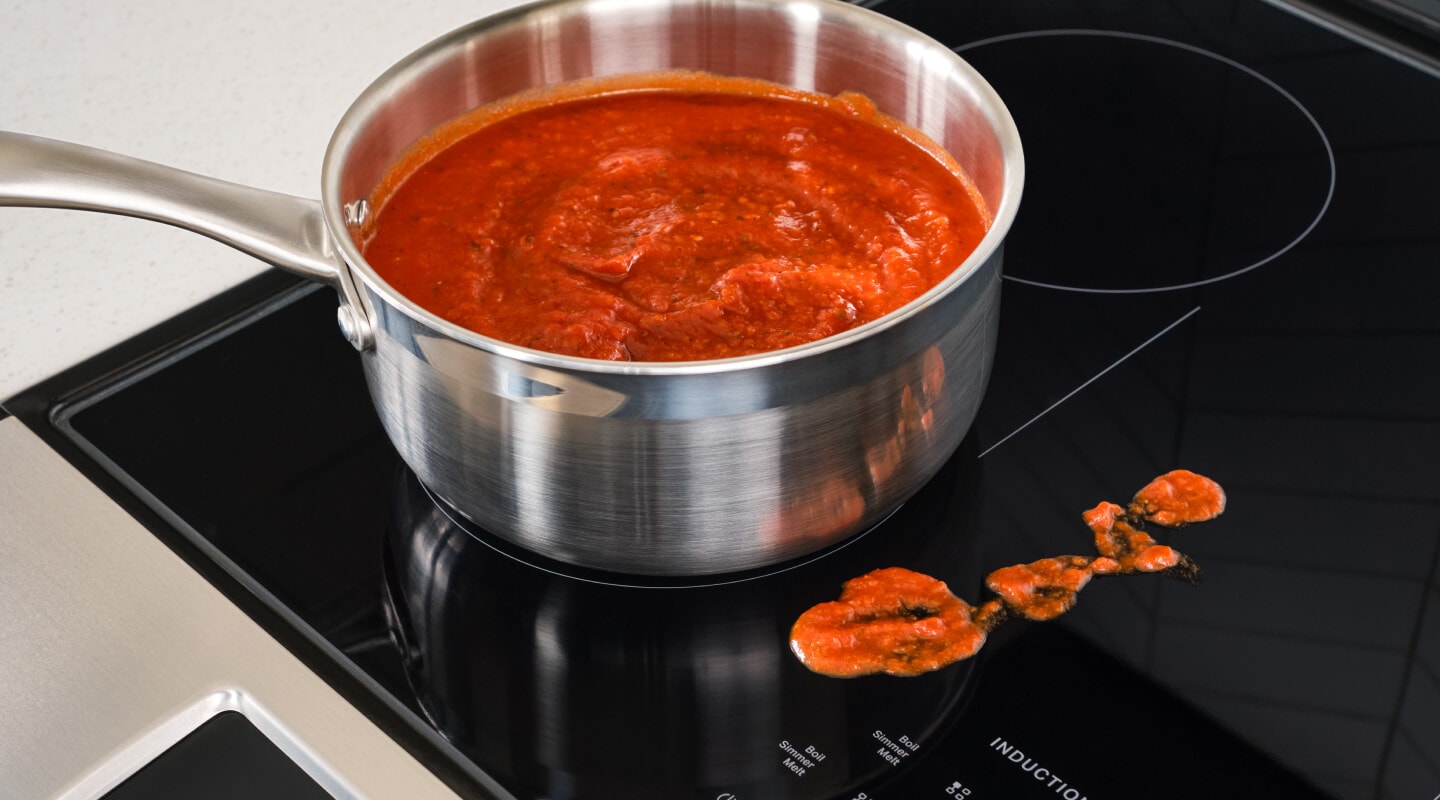
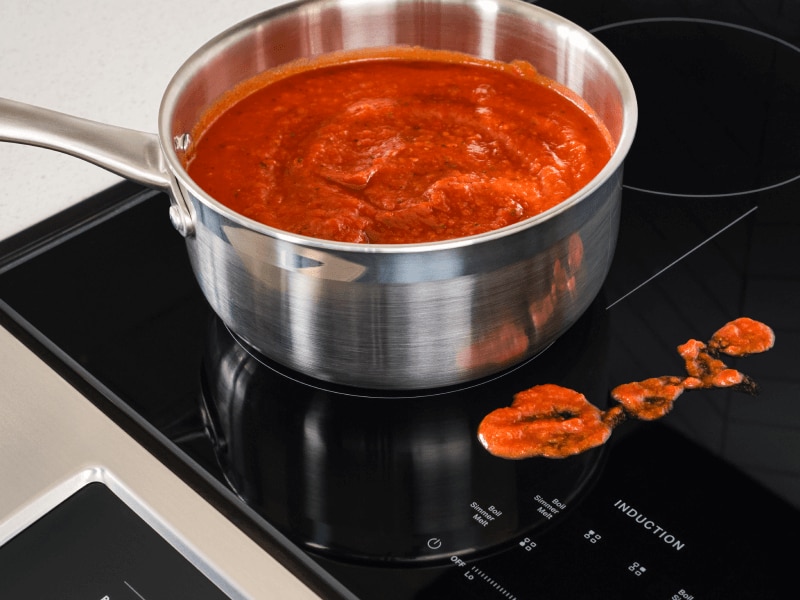
Cleaning an induction cooktop: A step-by-step guide
To clean an induction cooktop, first allow the surface to cool completely. Next, remove any stuck-on food or residue with a designated cooktop scraper, then apply a cooktop cleaning solution. Gently scrub the surface as directed, then wipe away any remaining cleaner with a damp cloth and finish by buffing the cooktop dry for a polished appearance.
If you own a stainless cooktop, refer to this guide on how to clean a stainless steel cooktop for optimal results.
What you’ll need
Before you tackle your kitchen’s everyday messes, gather the tools and supplies you’ll need to clean your induction cooktop.
Tools & Supplies
Cooktop scraping tool
Nonabrasive scrubbing pad
Dry cloth towel or microfiber cloth
Gentle but powerful cooktop solution suitable for glass or ceramic cooktops, or baking soda and vinegar
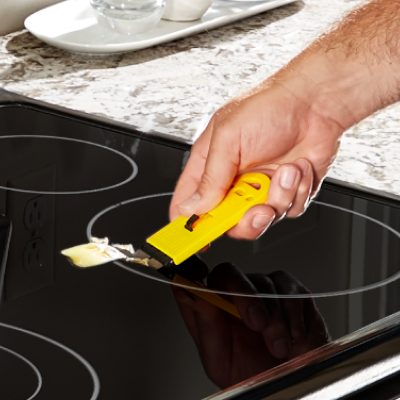
1. Scrape your cooktop
When cleaning your induction cooktop, make sure to allow your cooktop to cool down until it is warm, but not hot, to the touch. This makes cleaning up residues easier, as they break down faster. Many induction cooktops have lights that indicate if a surface is still hot.
After you’ve waited for your cooktop to cool down, use an induction cooktop-safe scraping tool to remove leftover residue. Keep your scraper as flat as possible against the surface to reduce the risk of scratching and damaging your cooktop.
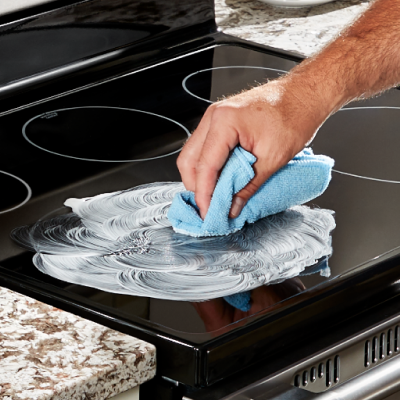
2. Clean your cooktop surface
Once your cooktop cools entirely and is no longer warm, add a cleaning solution to your induction cooktop surface. Follow the cleaner’s instructions for how long it should remain on the surface, and refer to your appliance owner’s manual for additional cleaning guidance. Then, wipe down your cooktop surface with a cloth kitchen towel.
Cleaning tips for tough stains
Extra tough cooktop stains may require a bit more time to wipe away, but the right cleaning agents and tools can go a long way.
First, while the cooktop is warm (but not hot) to the touch, hold a cooktop scraper as flat as possible and remove any loose grease and residue.
Next, combine vinegar and baking soda to create a mixture to spray on any remaining buildup. Allow it to sit for 10-15 minutes.
When the residue has softened, use the scraper again to scrape away lingering buildup.
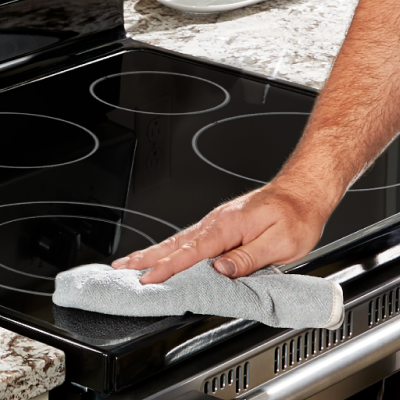
3. Polish your induction cooktop
Use a nonabrasive scrubbing pad or soft, dry cloth to wipe away the remaining amount of your chosen cleaner. After cleaning, buff the cooktop with a dry towel to remove any excess cleaner and polish the surface.
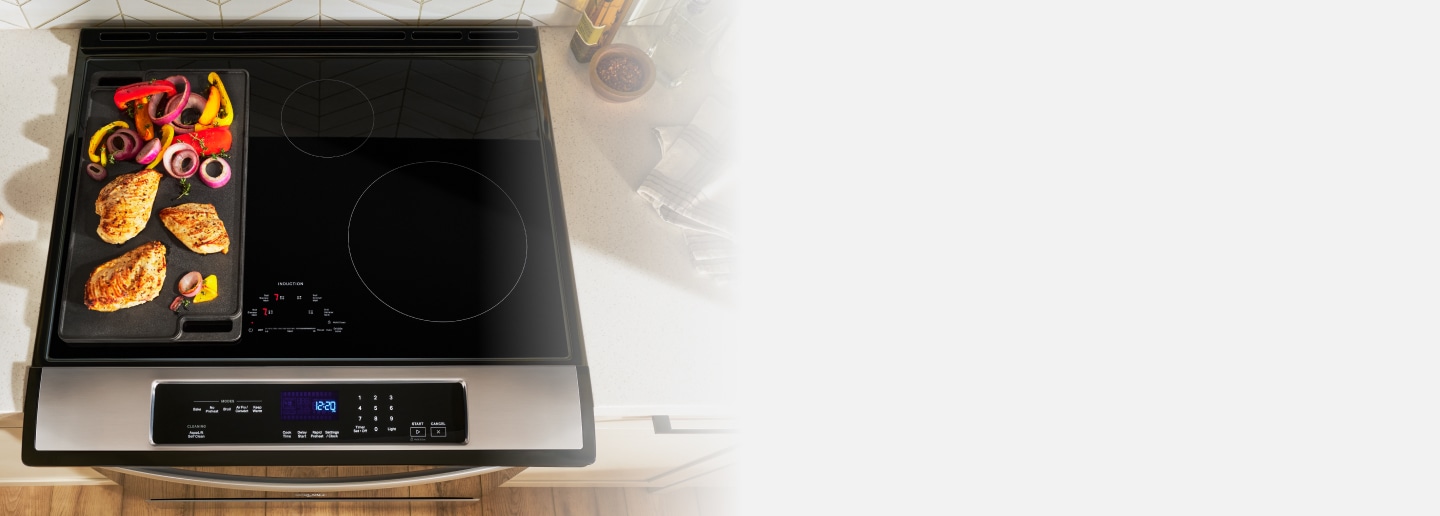
Whirlpool® Induction Cooktops
Get responsive temperature control
Induction Cooktops from Whirlpool brand offer fast cooking and responsive temperatures, paired with a sleek, easy-to-clean surface
Shop Whirlpool® Induction Cooktops with the WipeClean™ Coating
Select Whirlpool® Induction Cooktops offer the WipeClean™ Coating. Skip scraping and intense scrubbing of baked-on foods with the WipeClean™ Coating, the easiest-to-clean induction cooktop coating.1 Simply wet with water, wait and wipe away. Induction technology keeps the cooktop surrounding the elements cool, helping prevent baked-on messes. With fewer messes, you can clean the touch-activated controls on the cooktop as easily as you use them.


Induction cooktop cleaning FAQs
Induction cooktops are designed for easy cleaning, but having a few extra tips in your back pocket can help keep your cooktop glistening. Read on for more information about when to wipe your cooktop, which cleaning agents to avoid and how to help remove hard water.
What should you avoid when cleaning glass induction cooktops?
Abrasive scrubbing pads like steel wool are not safe to use on glass induction cooktops. If you’re noticing scratches on your induction cooktop, abrasive cleaning agents, steel wool and hard scrubbing tools may be the cause. White marks, on the other hand, may be caused by hard water stains that can build up on the cooktop over time.
Hard water, abrasive cleaning agents, steel wool and hard scrubbing tools can damage your cooktop, so try not to use these when cleaning.
Can you remove scratches from an induction cooktop?
Scratches on an induction cooktop may be difficult or impossible to remove. To help prevent damage, avoid abrasive scrubbing pads, steel wool, abrasive cleaning agents and hard scrubbing tools, which can damage glass cooktop surfaces.
Can stains become permanent on an induction cooktop?
You can help avoid stains becoming permanent by wiping down your cooktop after each use. Induction cooktops heat the pan, rather than the cooktop itself, so you don’t have to worry about messes baking onto the surface as you cook. Without baked-on messes to worry about, wiping down splatters or spills after each use can be quick and easy.
How do you prevent scratches on induction cooktops?
To help prevent scratches on an induction cooktop, avoid abrasive scrubbing pads, steel wool, abrasive cleaning agents and hard scrubbing tools. Instead, use gentle cleaners, soft cloths and designated cooktop scraping tools recommended for glass surfaces.
What’s the best way to prevent stains on an induction cooktop?
Wipe spills and splatters after each use and clean your induction cooktop regularly to help avoid stains. White hard water stains can build up on your cooktop and make it look dirty, even when you know it has been cleaned. Help fight staining by applying vinegar to a dry cloth, then wiping it on the cool cooktop surface. Wait several minutes, then gently work the stains out of the cooktop with the same cloth. Then, wipe the area with a clean cloth and distilled water or a cooktop cleaning solution.
Shop all Whirlpool® Induction Cooktops
Select induction cooktops from Whirlpool brand, such as this model, feature Assisted Boil and notify you with a helpful tone and flashing light when boiling water reaches the right temperature to add food,2 helping you make the most of your time. Find the right Whirlpool® Induction Cooktop for you.
Was this article helpful? Pass it on
Explore more with Whirlpool brand

1. When compared with cooktops with same heating technology with similar wattages.
2. Requires an accessory pot, part number W11463464, sold separately

