


 New Code Sent!

How to clean an oven inside and out
A clean oven does more than help keep your kitchen looking its best. Over time, residue and buildup can affect how your oven performs and how your food turns out. When a dirty oven heats up, stuck-on food can create unpleasant odors and even impact flavor.
In short, keeping your oven clean can mean less stress when dinner time rolls around. It’s not as complicated as most people think, so don’t wait until stuck-on food accumulates and creates a problem in your oven. Follow these easy steps to clean your oven and make mealtimes with your family run as smooth as possible.

Sign Up for More Insights to Stay Connected
Enjoy articles like this? Get helpful guides and appliance care tips sent straight to your inbox.

Your subscription was successful
Thank you for signing up. Keep an eye on your inbox for our next newsletter.


Why it’s important to regularly clean your oven
Regularly cleaning your oven helps to prevent grease and grime buildup inside your appliance. The general guideline for oven maintenance recommends deep-cleaning your appliance seasonally or every three months of regular use. However, spot-treating spills and splatters between deep-cleans can help reduce mess overall. If your oven is cranking out multi-course meals almost every single day, you may need to give it a deep-clean more frequently than every three months.
Learn more about seasonal cleaning schedules for a fresh reset year-round.


Cleaning an oven: A step-by-step guide
With a rag or dishcloth, you can clean your oven by wiping the interior and exterior of the appliance down using common household materials like baking soda, vinegar and lemon juice. To wash the racks, simply soak in soapy water before giving them a good scrub with a stiff bristled cleaning brush.
Select Whirlpool® Ovens and Ranges feature a Self-Cleaning Cycle that can simplify this process. If your oven doesn’t have a self-cleaning cycle, or you simply prefer to clean it by hand, follow the steps below to help keep your oven clean.
Tools
A stiff bristled cleaning brush
A rag or dishcloth
Soft cloth towels
A brush or flexible silicone spatula
A plastic scraper
A spray bottle
Supplies
Old towels
Dish soap or laundry detergent
Plastic trash bag (optional)
Baking soda
White vinegar
Lemon juice or vanilla (optional)
Oven-safe baking dish
Glass cleaner (optional)
Stainless steel cleaner (optional)
Step 1: Remove and clean oven racks
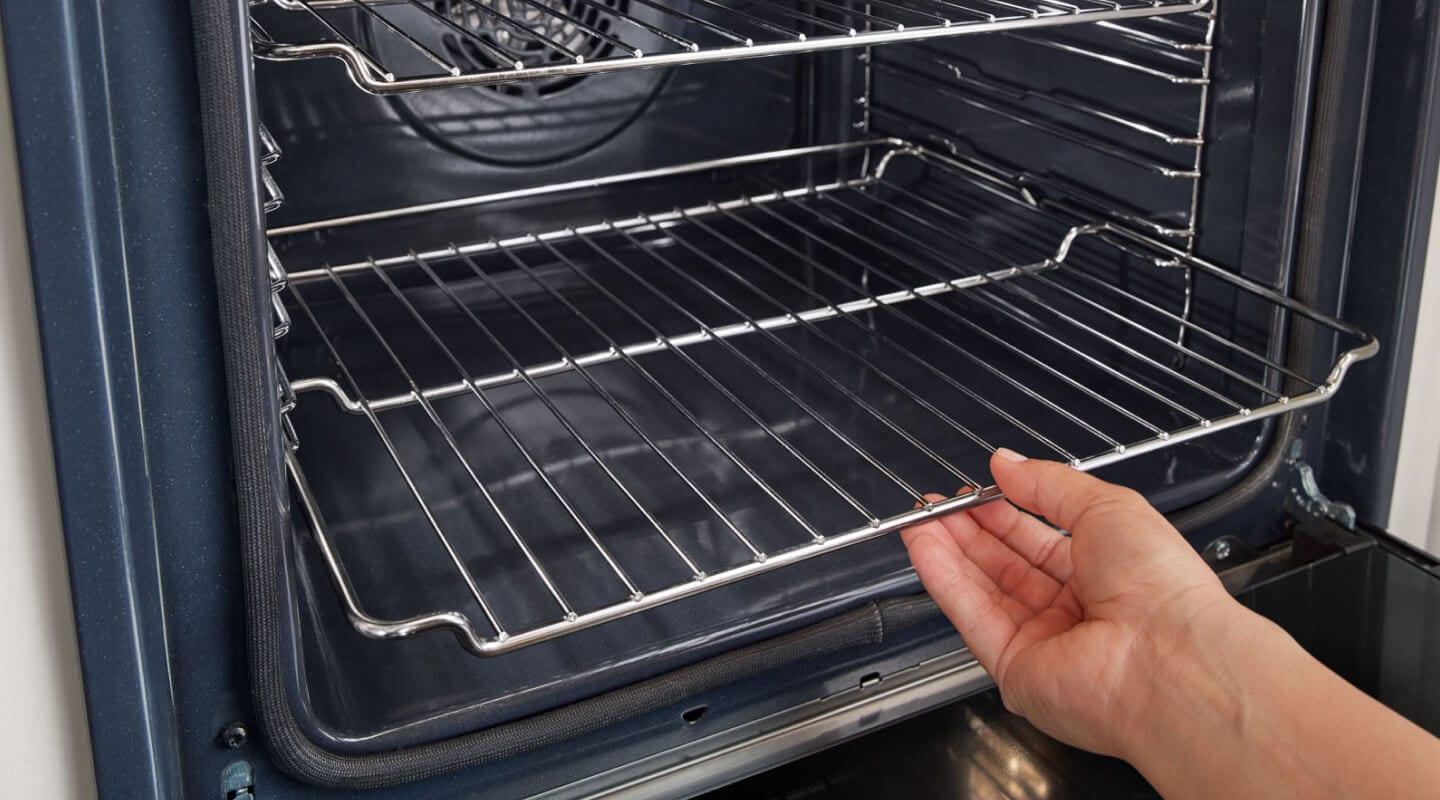
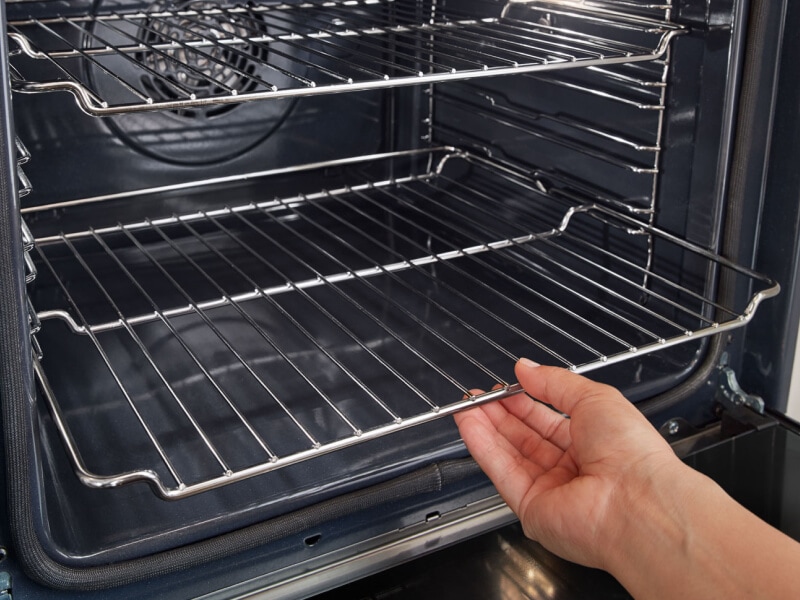
Just like the rest of your oven, your oven racks can collect grease and spills. Soaking and scrubbing them can help remove the grime.
Soak the oven racks
Remove the oven racks from your cooled oven and place them in a large tub, such as a utility sink. If the racks don’t fit, you can even soak them in your bathtub. If you are soaking your racks in your bathroom, line your tub with old towels to help avoid scratching.
Fill with enough hot water to cover the racks, then pour in ½ cup of mild dish soap or ¾ to 1 cup of laundry detergent. Soak for at least two hours or overnight, depending on the dirtiness of the racks.
Scrub oven racks clean
- Use a stiff bristled cleaning brush or a steel wool pad to scrub the racks, then use a rag or dishcloth to wipe them clean. Rinse your oven racks completely.
Dry and replace the oven racks
- Use soft cloth towels to completely dry the racks to help avoid rust or corrosion. Replace the racks unless you're also cleaning the oven interior. If racks feel difficult to slide back in place, a light coating of cooking oil on the rack guides can help restore movement. For racks with special features or finishes, follow your owner’s manual for proper care and cleaning instructions.


Step 2: Clean the inside of the oven
Over time, food can build up on the walls of your oven, which is why it’s important to clean the inside of the oven frequently. Wiping the oven interior down with baking soda and vinegar or lemon juice can help you remove stubborn splatters and spills.
Prepare to clean the oven interior
Starting with a cool oven, remove all pots, baking sheets or other baking accessories, as well as your oven racks. Place towels or a plastic trash bag under your oven door to help catch drips.
Clean your oven with baking soda
Pour ½ cup baking soda into a bowl and add 3 tablespoons of water to create a thin, spreadable paste.
Using a brush or flexible silicone spatula, spread the mix throughout the inside of the oven, coating the top, sides, bottom and door, including the door glass.
Let it rest anywhere from 20 minutes to overnight depending on the dirtiness of your oven.
Get burnt residue off the bottom of your oven by mixing baking soda and water to form a paste. Then, use a nonscratch scrubbing sponge or plastic scraper to gently scrub the oven.
For tricky spots that are really tough to remove, you can apply a layer of the baking soda paste over the surface for 12 to 24 hours before wetting and scrubbing it off.
Wipe up the baking soda with vinegar or lemon juice
Spray the oven interior down with white vinegar or lemon juice and wipe everything with a damp rag or dishcloth. Use a plastic scraper to help remove stubborn spots. Repeat this step until all of the baking soda paste is removed.
Clean the interior oven door glass
Spray the glass surface with white vinegar or lemon juice and wipe down with a damp cloth. Repeat this process until all of the baking soda paste is removed. Spray down one last time with vinegar or lemon juice, then dry with a soft cloth.


Step 3: Remove lingering oven odors
Cleaning the inside of your oven should help take care of most odors, but some pesky food smells like fish are harder to combat. Deodorize your oven with items commonly found in your household, like lemon juice, white vinegar or vanilla.
Prepare oven deodorizing solution
Preheat the oven on low heat. Fill an oven-safe baking dish with about an inch of water. Add either a teaspoon of lemon juice, white vinegar or vanilla, depending on your preference and what you have on hand.
Heat deodorizing solution in oven
Place the baking dish in the oven at a low temperature for about an hour, adding water if too much evaporates. Remove when the smell is neutralized and enjoy your refreshed oven.


Step 4: Clean the outside of the oven
Cleaning the outside of your oven the right way doesn’t just make things look cleaner—it can also help protect your oven’s finish. You can clean the outside of your oven by using a mild liquid cleaner.
Clean a stainless steel exterior by wiping away food and water deposits with a microfiber cloth dampened with warm water, following the direction of the grain. Then use a stainless steel cleaner, following product and appliance guidelines, to remove residue and fingerprints and restore shine.
Clean exterior oven door glass
Close your oven door and spray the exterior of the window with vinegar or glass cleaner. Wipe with a soft microfiber towel to buff away streaks.
Clean the stovetop and exterior oven surfaces
For porcelain enamel surfaces or when cleaning glass electric stovetops, spray with a glass cleaner or mild liquid cleaner and scrub with a non-abrasive scrubbing pad. Gently clean around the model/serial/rating plate because scrubbing may remove numbers.
To avoid surface staining on models with metallic paint, do not use abrasive cleaners, cleaners with bleach, rust removers, ammonia or sodium hydroxide (lye). If the outside of your oven door is stainless steel, use a special stainless steel cleaner.
In addition to surfaces, be sure to also clean your gas stove burners and grates with a non-abrasive scrubbing pad or cloth and gentle cleaner or soap.

Whirlpool® Gas Ranges
Get dinner on the table with ease
Whether you’re baking a casserole or roasting your family’s favorite chicken recipe, a Whirlpool® Gas Range offers convenient features to help you at mealtime
Oven cleaning tips
Use the following practical tips to help keep your oven clean.
Tip 1: Regularly cleaning your conventional or convection oven, inside and out, helps keep it performing at its best. Plan to clean your oven every three to six months or more frequently if spills and buildup occur.
Tip 2: For easier cleanup, wipe up spills and splatters from your pots and pans when the oven is slightly warm, but not hot, which might make the residue easier to remove.
Tip 3: Some cleaning experts recommend avoiding chemical oven cleaners. These products often contain harsh ingredients and can leave behind fumes that linger in your oven even after cleaning.
Tip 4: If you have a porcelain enamel exterior, make sure to clean up spills containing acids like
vinegar and tomato as soon as the entire range is cool to avoid damaging the finish.- Tip 5: Looking for an easier way to clean your oven? Self-cleaning ovens can turn grease into a
powder that you can wipe away.


Oven cleaning FAQs
Learn the answers to some common questions about cleaning an oven, including information about self-cleaning ovens and cleaning a glass oven door. Plus, discover how to handle tough spills.
When should I use self‑cleaning or steam cleaning on my oven?
Use the self-clean cycle when your oven has heavy, baked-on residue that needs a deeper clean. Choose steam clean for lighter spills and more frequent touch-ups, since it uses lower heat and a shorter cycle to help loosen residue for easier wiping.
Can you use oven cleaner on a self-cleaning oven?
No. It is not advisable to use commercial oven cleaners or chemicals on self-cleaning ovens, as they can damage interior surfaces.
How do you clean between the glass on an oven door?
Cleaning between oven door glass often involves removing or taking apart the door, which is generally not recommended. Disassembly can affect your warranty, so it may be best to consult a professional for assistance.
How can you degrease an oven and clean tough spills?
You can degrease an oven and clean tough spills by using the self-clean cycle. The oven locks and heats to a very high temperature, reducing baked-on grease and food residue to ash. Once the cycle is complete and the oven cools, simply wipe away the remaining ash.
Shop Whirlpool® Ovens
With helpful features like Adjustable Self-Cleaning Technology on select models, Whirlpool® Ranges and Ovens are designed to make mealtime more manageable so you can focus less on cleanup and more on spending time with your family. Help keep your kitchen looking its best by browsing the full collection of ranges and wall ovens from Whirlpool brand to find the appliance that’s right for your home.
Need to clean your stovetop as well? Follow a guide for how to clean gas stove grates and burners or how to clean a glass cooktop to help get all your cooking appliances sparkling.
Was this article helpful? Pass it on
Explore more with Whirlpool brand