

 New Code Sent!

How to sanitize laundry: Tips and methods
Germs can be found on towels, workout clothes and bedding, which is why your family might benefit from a washer and dryer combination with specialty features designed to sanitize laundry. Generally, you can sanitize laundry by washing it in hot water and utilizing unique cycles on some models, like UV Clean Technology found on select Whirlpool® Washers. Read on to learn three ways to help sanitize laundry.

Sign Up for More Insights to Stay Connected
Enjoy articles like this? Get helpful guides and appliance care tips sent straight to your inbox.

Your subscription was successful
Thank you for signing up. Keep an eye on your inbox for our next newsletter.


What does the Sanitize cycle on a washer do?
Sanitize cycles on washing machines or dryers are designed to help fight against particular common household bacterias by using an extra-hot wash or dry cycle. If your machine doesn’t have a designated cycle, use the warmest temperature setting available to help optimize cleaning performance.
Keep in mind that the Sanitize cycle tends to take longer than other wash cycles, so be sure to plan laundry day accordingly.


How do I sanitize my laundry?
Sanitizing your laundry can be as simple as washing your clothes on a special cycle or adding a laundry sanitizing product or bleach. Which option you choose and which type of bleach used depends on your washing machine and type of load. Be sure to check care labels to avoid fading or damaging the fabric.
Supplies
Laundry sanitizer product
Liquid bleach
Tools
- Washer
- Dryer

Option 1: Wash on a Sanitize cycle
Check to see if your washer has a cycle designed for sanitizing laundry.
If your washing machine doesn’t have a Sanitize cycle, use the warmest temperature setting available to help optimize cleaning performance.
Learn more about how UV light technology works in a washing machine to help reduce bacteria without hot water.
The Sanitize Cycle with Oxi, available on select Whirlpool® Washers, uses extra-hot water to eliminate 99.9% of three common household bacteria.1

Option 2: Add a laundry sanitizer product
If you don’t have a Sanitize cycle or your laundry can’t be washed in hot water, add a laundry sanitizing product and wash as normal. These products, available from top household cleaner brands, can also be added to a Sanitize cycle for an extra bacteria-fighting boost. Add sanitizer to your load based on product directions.

Option 3: Add liquid bleach
Liquid bleach can be used in addition to a Sanitize cycle, or for bleachable items that can’t be washed in hot water. Add bleach to your load based on the manufacturer’s directions. When using bleach, remember to spot test in a hidden area to help avoid fading or damage to the fabric.
Finish sanitizing in the dryer
The final step in sanitizing laundry is running it through the dryer. Use the designated Sanitize cycle if your dryer has one. If it doesn’t have one, use the warmest temperature setting available to help optimize cleaning performance.
Select Whirlpool® Dryers feature a Sanitize cycle that provides care for your clothes in the dryer while eliminating 99.9% of common household bacteria.1
Care tip:
If someone in your house is sick, don’t forget to wash your hands after starting a new load. Or, you can wear disposable rubber gloves when handling soiled laundry and bedding.
Learn which laundry loads benefit most from UV clean technology for a gentler approach to reducing bacteria.


Use UV technology to reduce bacteria in clothes
Select washers, like this washer from Whirlpool brand, feature built-in UV light technology that can help reduce some bacteria in the wash. UV lights can break down the genetic material of bacteria and other microbes, and can work alongside detergent to help release soils and provide a thorough clean.
Shop Whirlpool® Washers with UV Clean Technology
Get a thorough clean with industry-first UV Clean Technology on select Whirlpool Washers that reduces bacteria2 in the wash without requiring high temperatures or fading fabrics. When selected, a bright blue light signals the UV technology is working to tackle the bacteria in the water, giving your clothes a deep clean while keeping fabric care in mind.


Sanitizing laundry FAQs
Finding out when, and how, to sanitize your laundry can help you make the most of every load. Learn tips for sanitizing laundry, and find out how often to sanitize and more with answers to common questions below.
What can be used to sanitize laundry?
If your washing machine does not have a dedicated Sanitize cycle, there are many store-bought products that can be used to help sanitize your laundry. Make sure that the temperature of your water is hot enough to clean germs, then apply one of the following products or methods after confirming it is safe to use per your item’s care tag:
Hydrogen peroxide
Phenolic disinfectants
Hot water and steam
What temperature kills most bacteria in the washer and dryer?
The maximum heat of water in your washer and air in your dryer is dependent on the model. A temperature of 60 degrees Celsius, or 140 degrees Fahrenheit, is generally the minimum temperature recommended to help disinfect your clothing. Dryer temperatures can run between 120 to 160 degrees Fahrenheit on average, though this will vary by model.
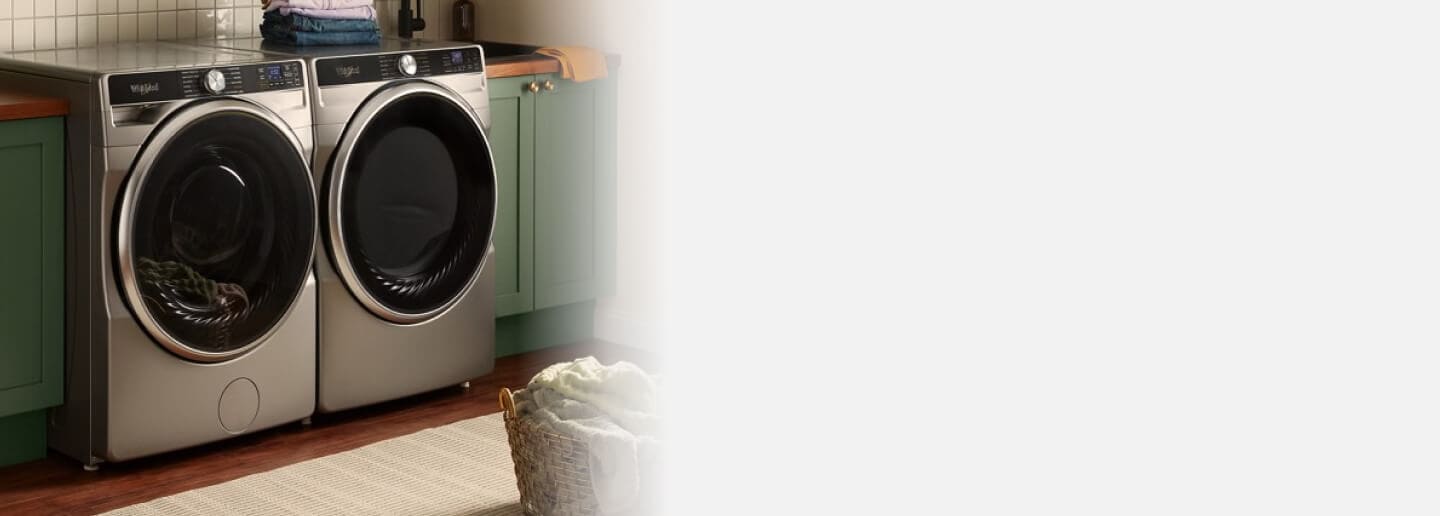
Front load washer and dryer sets
Keep laundry fresh
The FreshFlow™ Vent System on select Whirlpool® Washers helps keep your clothes and washer fresh, while steam-enhanced cycles on select Whirlpool® Dryers help prevent wrinkles and reduce static
When should I use the Sanitize cycle on a washing machine?
The simple answer is that you should use a Sanitize cycle when you are washing items that might carry extra bacteria, such as towels, pet bedding or clothing, underwear, workout clothing or bedding. Sanitize cycles are also useful in situations when someone in your family has been sick: You can isolate this clothing and run it through a Sanitize cycle by itself.
Do you use detergent with the sanitize cycle?
Because detergent and the Sanitize cycle serve different functions, it’s best to use both together when cleaning laundry. The Sanitize cycle typically uses high temperatures to help reduce bacteria in the load, while detergent attaches to soils, helping carry them away with the wash water.
How often should you sanitize your laundry?
Because hot water cycles can consume extra energy and can shrink or fade some clothes, it’s ideal to use it only with heavily soiled loads that may have extra bacterial buildup. This can include sports gear or workout clothes, laundry soiled with bodily fluids, pet bedding, undergarments and more.
When should I clean my washer and dryer?
You should clean your washing machine and dryer regularly, but especially after laundering clothes, bedding or stuffed animals that have been exposed to a sick family member to help prevent spreading bacteria. Cleaning your washer may be done by running your appliance with tablets designed to clean the interior—like affresh® Washing Machine Cleaner Tablets3—while wiping down the exterior and vents.
Review these guides for more information on cleaning your washing machine and cleaning your dryer.
Shop Whirlpool® Washers and Dryers
Streamline your busy laundry routine with convenient features like the Load & Go™ Dispenser on select Whirlpool® Washer models and Advanced Moisture Sensing on select Whirlpool® Dryer models for greater control over your family’s clothing care. Browse the full collection to find the Whirlpool® Washers and Dryers that fit your household.
1. Bacteria tested were S. aureus, P. aeruginosa, K. pneumoniae.
2. Available on select cycles. Bacteria tested include Staphylococcus aureus, Bacillus subtilis, Pseudomonas aeruginosa.
3. affresh products and the recommending brands' products are all owned and distributed by Whirlpool Corporation.
Was this article helpful? Pass it on
Explore more with Whirlpool brand